


The White Elephant of Thailand: Why This Rare Animal is a National Treasure
When you spend a little time wandering through the golden yellow and red temples of Bangkok or the tucked-away markets in the “soi” of Chiang Mai, then you would have seen them: elephants. Maybe not in true physical glory but carved into stone, printed on baggy pants or on the translucent green Chang bottle.
But there is one specific type of elephant that holds a status far above all others, and this elephant is featured prominently in CITTRA Collective artworks. It’s a royal symbol that we kept running into during our travels and research that is etched deeply into the heart of Thai culture. I’m talking about the beautiful White Elephant, known locally in Thailand as Chang Phueak (ช้างเผือก).
As travellers and artists, we naturally start asking questions. Why is this animal so sacred? What is the history behind it, and why does it appear so often in Thai symbolism?
It turns out that there is much more to this creature than you may think. Of course, it’s a beautiful and interesting animal, but it doesn’t stop there. It's part of a much older cultural and spiritual story that connects royal power, religion, and tradition.
In fact, its importance goes deep into Buddhist history. According to Buddhist tradition, Queen Māyā—the mother of Siddhartha Gautama, who later became the Buddha—dreamt of a white elephant entering her womb before his birth. Because of this story, white elephants became associated with purity, divine favour, and spiritual power across much of Southeast Asia.
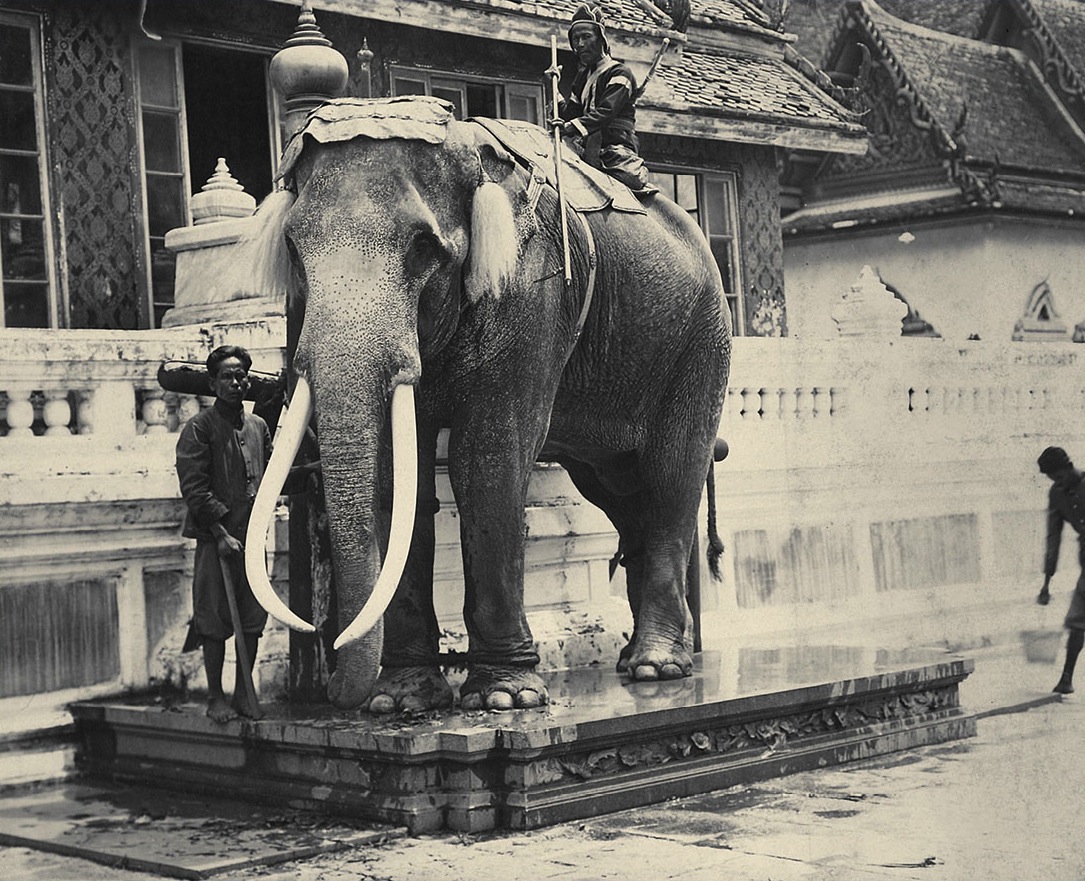
What exactly is a "White Elephant" anyway?
When a lot of us hear “white elephant” we often just imagine a white elephant and, yeah, technically you are correct, but they are not actually white. Not like a sheet of paper anyway. If you see one close up in real life it actually looks a little bit more dusty reddish-brown or a soft pale pink, especially when the skin is wet.
Scientifically speaking, these elephants are not a separate species. They are Asian elephants (Elephas maximus) with unusually pale pigmentation. People sometimes assume they are albino elephants, but that isn’t actually the case — the classification in Thailand is based on traditional physical traits rather than a specific genetic condition.
So to win the title of a true Chang Phueak, the elephant must possess seven auspicious traits:
Pale or whitish eyes
A pale roof of the mouth
White or pale toenails
White body hair
Pale skin (often described as the colour of unfired clay)
White hair on the tail
Pale testicles

Only elephants that show all seven of these characteristics are traditionally recognised as a full royal white elephant. If an elephant only has some of the traits it may still be considered rare or auspicious, but it would not officially qualify as a complete Chang Phueak in the traditional classification.
In Thai culture, these features aren’t seen as strange biological quirks. They are interpreted as auspicious signs, and historically the discovery of an elephant with these traits was considered a blessing for the kingdom.
The King’s Elephant: Why They Belong to Royalty
Usually in a lot of places in the world, if you find something rare it becomes a bit of a "finders keepers" situation — hence the classic adage “finders keepers, losers weepers.” But in Thailand, finding a white elephant isn’t a lucky break for one person. Historically it has been treated as something much bigger than that — almost a national event that involves the monarchy itself.
There was even legislation in the early twentieth century, often referred to as the Elephant Maintenance Act of 1921, which reinforced the rule that a white elephant discovered in the kingdom must be presented to the King and recognised as royal property.
But the interesting part is that the tradition didn’t actually start with that law. The connection between white elephants and the Thai monarchy goes back centuries, long before modern legislation existed. During the Ayutthaya Kingdom, which ruled much of Siam from the 14th to the 18th century, white elephants were already seen as sacred animals connected to royal authority. Their symbolism was closely tied to Buddhist ideas of purity and auspicious signs, which is why possessing one was considered such a powerful sign of legitimacy for a ruler.
The Royal Scorecard
So when a king had white elephants, it wasn’t just about owning a rare animal. It was seen almost like a sign that the ruler governed with merit and moral authority, and it kind of validated them as a leader.
White elephants were considered one of the strongest of those signs.
In the past it was a numbers game: During the reign of King Mongkut (Rama IV) in the mid-1800s, the discovery of many white elephants was an event of major importance. Royal chronicles would have recorded them carefully because they were believed to reflect the king's merit and the prosperity of the kingdom as a whole.
Today, the meaning has shifted. In a world where we know so much more about wildlife conservation, the success of the ruler isn't about how many sacred animals exist under royal ownership.
White elephants are still considered extremely auspicious, but they’re no longer treated as a way to measure a king’s power. Instead, the emphasis is on their rarity and cultural significance. The symbolism has evolved; the discovery of a white elephant is often viewed as a rare blessing for the nation and a reminder that these ancient traditions are still part of Thailand’s cultural story.
Where do they live now?
When a white elephant is spotted today, it goes without saying that it's handled with extreme care. They aren’t treated like ordinary animals or put into a standard zoo. Historically they were kept near royal palace grounds in Bangkok, and they are still given formal royal titles and treated as living symbols of national heritage.
Some royal elephants are cared for under the supervision of the Thai Royal Household, while Thailand also maintains specialised elephant facilities across the country.
One of the best known is the Thai Elephant Conservation Center, which focuses on elephant healthcare, conservation research and training. While not all royal white elephants live there, the centre represents one of the country’s most important institutions for protecting elephants and preserving knowledge about them.
For us as travellers and cultural artists, it really makes you think about wildlife in Thailand. It’s not all about conservation; it's about connection, spirituality and bonds that have lasted for hundreds of years.
Spotting the Symbol: Why the Elephant is Everywhere
You know that feeling when you learn something new and then all of a sudden it’s the only thing you see? Now that we have been talking about white elephants, you will probably start to notice that they are not just tucked away in royal stables.
The Original "National Icon"
Before the current striped flag was adopted in 1917, the national flag of Siam was a bold red banner with a white elephant right in the centre.

The Flag of Siam
The symbol was closely tied to the monarchy and was used during the reigns of King Mongkut and King Chulalongkorn, when the white elephant represented royal power and prosperity for the kingdom. Even though the official flag later changed to the modern red, white and blue tricolour under King Vajiravudh in 1917, the elephant symbol never really disappeared from Thai culture.
From a travelling cultural perspective, spotting the elephants almost becomes a bit of a fun game. Once you know the symbol exists, you start finding it in all sorts of places:
The Royal Navy: If you see a Thai naval ship, look at their official ensign—the white elephant is still there, standing proud on a red circle.
Temple "Easter Eggs": At Wat Phra Kaew in Bangkok, you will see elephants appear in the temple murals and decorative artwork. In many cases, they are shown in royal or ceremonial scenes, often connected to stories from Thai mythology and the Ramakien epic.
Doorways and Roofs: Look up when you walk past older temples or traditional buildings. The elephant motif sometimes appears in gables, carvings and decorative panels, often acting as a kind of symbolic protector for sacred spaces.
The Symbolism of Colour
From an art perspective, it's not just about the elephant but about the colours that accompany it. Traditional Thai artwork often pairs elephant imagery with deep red and gold tones, and once you start to notice it, you will realise how common this palette is.
Like in many cultures, colours have long been associated with symbolism. These colours (deep red and gold) are usually paired with royalty, prosperity and sacred Buddhist spaces, which is why they appear so much in temples, royal architecture and ceremonial artworks.
The pale tones of the elephant placed against those rich colours creates a strong visual contrast that immediately signals something important or sacred.
Why we brought this into CITTRA Collective
These subtle forms of symbolism are something that I love, and when I think about creative print ideas for the CITTRA Collective cultural prints, learning these small details is what makes our cultural art contemporary and honest. It is about taking the things you learn from the places you visit and combining them together to make something visually stunning and culturally powerful.
Why the Elephant Still Matters
After travelling through Southeast Asia and Thailand, you realise that all elephants are a part of the history and tradition. They are majestic, beautiful creatures that have been adored for hundreds of years.
Across many cultures in Asia, the elephant has come to represent strength, wisdom and good fortune. In Hindu tradition, for example, the elephant-headed deity Ganesha is associated with wisdom and prosperity, which shows just how deeply the symbolism of the animal runs across the region.
For a long time, elephants were part of royal parades, temple ceremonies and even warfare, often decorated in intricate textiles and ceremonial ornaments. Seeing that history reflected in art and culture today really makes you realise how long the connection between people and elephants has existed.
This is why we chose elephants as a subject for our cultural art prints. Whether you are drawn to the deep meaning of the elephant as a symbol, the animal in general from a nature standpoint, or you just love unique visual styles and bold poster decor, the elephant deserves its place.
Here is a traditional art depiction of elephants being used in battle, similar to the cavalry used in historical Western militaries.

The Journey Continues
Next time you are travelling and see an elephant motif on a textile, mural or even a beer bottle, take a closer look and ask yourself questions. There's usually a reason for the presence of something, and the more you look, the more you see.
Sources & further reading
To ensure this guide is as accurate as it is inspiring, I’ve drawn from a mix of historical archives, official cultural bodies, and wildlife studies, alongside my own first-hand experiences. If you want to dive deeper into the “why” behind the beauty, these are some of the best places to start:
Department of Provincial Administration (Thailand) – Official criteria for identifying royal white elephants (Chang Phueak), including the seven traditional auspicious traits.
Encyclopaedia Britannica – The story of Queen Māyā’s dream of the white elephant before the birth of the Buddha
Wikipedia – White Elephant (Animal) – Historical records and cultural significance of white elephants across Southeast Asia.
Wikipedia – Ayutthaya Kingdom – Historical background on the kingdom where the royal symbolism of white elephants became strongly connected to monarchy and legitimacy.
Thai Elephant Conservation Center (TECC) – Thailand’s primary institution for elephant welfare, veterinary research, and conservation training.
World Wildlife Fund (WWF) – Asian Elephant – Scientific information about the Asian elephant species and conservation efforts.
Royal Thai Navy – Naval Ensign – Details about the official naval ensign which still features the white elephant symbol.
Keep Exploring
We have pages dedicated to Thailand and elephants. Whether you want to learn more, experience new things, or shop unique cultural artwork, we’ve got you covered.
DISCOVER MORE ABOUT THAILAND
Want to explore more about Thailand? Dive into blog posts about culture, temples, traditions and even things like durian. You’ll also find artwork and collections inspired by the places and symbols I discovered while travelling.
DISCOVER MORE ABOUT ELEPHANTS
Want to learn more about elephants? Explore blog posts about their history, symbolism and role in cultures around the world, along with artwork inspired by these incredible and majestic animals.


